.jpeg)
Presenter: Aurora Pedro
CEUs: Approved for CCHI 2.00 CE Hour CEAP, IMIA/NBCMI 0.2. and RID.
Description:
There are over 500 Indigenous languages spoken in Latin America. Why is it then, that the narrative that everyone from south of the US-Mexican border speaks Spanish (with a few exceptions)? This is not by accident, but rather by design. During this presentation, you will learn about the diversity of Indigenous languages, best practices, and techniques for identifying Indigenous languages led by Indigenous experts in the field. You will learn about case studies that demonstrate how this dominant narrative has fatal consequences and the efforts of Indigenous peoples to fight for their language rights.
Objectives:
Participants will:
- learn about the diversity of Indigenous languages and techniques on how to identify these languages. Participants will walk away with the knowledge to apply these techniques in their everyday work.
- learn about best practices for interpretation when working with Indigenous interpreters and the community. This will include unique situations that may arise when working with Indigenous populations.
- learn about the historical context of migration and displacement of Indigenous populations and how these historical trauma arise when working with Indigenous populations. Participants will learn how to recognize and work through these challenges.
Bio:
Aurora Pedro is Maya Akateko and Q’anjob’al from San Miguel Acatan and Santa Eulalia Huehuetenango, Guatemala. She manages the Center for Indigenous Languages and Power (CILP) at Comunidades Indígenas en Liderazgo (CIELO). She co-facilitates CIELO’s cultural sensitivity workshops with a focus on language diversity and migration patterns by looking at root causes and historical contexts of displacement of Maya communities from Guatemala. Aurora is a trained interpreter in English, Akateko, and Q’anjob’al and incorporates her linguistic skills as a doula for Indigenous parents. Aurora continues to develop her skills to assist Indigenous communities and fight for linguistic rights.
Note that this session will use key words in Spanish to describe Indigenous history. This will be contrasted with words from Indigenous languages: Akateko and Q'anjob'al.
Cost:
- CHIA Members: $20
- Non-Members: $35
Become a CHIA Member for $50 You do not need to live or work in California to join—membership is open to all!
Please note: All registrations are final. Refunds and cancellations are not available.
Platform and Recordings:
Zoom recorded webinars will be offered on demand on the provision that the quality of the recording is adequate. CHIA cannot guarantee the availability of on demand viewing.
CEUs:
To receive CEUs for a session, you must participate in the entire activity—partial attendance will not qualify. Your participation will be timestamped to verify completion and issue certificates.
TSID is an Approved RID CMP Sponsor for continuing education activities. This Professional Studies program is at the little/some Content Knowledge Level.


Languages:
Unless specifically mentioned sessions will be presented in English. The content of presentations will apply to both spoken and sign language. Presenters may draw on examples using multiple languages as relevant to their content.
Training level:
This event is intended for working interpreters and is appropriate for all experience levels. While interpreting students are welcome to attend CHIA events, these events are not specifically designed for students.
Questions?
Email the Education Committee Chair:
education@chiaonline.org
Follow us on LinkedIn, Facebook and Instagram!
CHIA promotes an environment of mutual respect free of discrimination based on gender, sexual orientation, race, religion, hearing status, or any other protected class.

 Charging Station Sponsor- 2027 CHIA Conference in Los Angeles, CA
$2500.00
Charging Station Sponsor- 2027 CHIA Conference in Los Angeles, CA
$2500.00 Daily Agenda Email Sponsor - 2027 CHIA Conference in Los Angeles, CA
$300.00
Daily Agenda Email Sponsor - 2027 CHIA Conference in Los Angeles, CA
$300.00.png) Digital Sponsor - 2027 CHIA Conference in Los Angeles, CA
$500.00
Digital Sponsor - 2027 CHIA Conference in Los Angeles, CA
$500.00.png) Bronze Sponsor / Coffee Break - 2027 CHIA Conference in Los Angeles, CA
$2000.00
Bronze Sponsor / Coffee Break - 2027 CHIA Conference in Los Angeles, CA
$2000.00.png) Bronze Sponsor / Photo Booth - 2027 CHIA Conference in Los Angeles, CA
$2000.00
Bronze Sponsor / Photo Booth - 2027 CHIA Conference in Los Angeles, CA
$2000.00.png) Exhibit Lite - 2027 CHIA Conference in Los Angeles, CA
$800.00
Exhibit Lite - 2027 CHIA Conference in Los Angeles, CA
$800.00.png) Mobile App Push Notification - 2027 CHIA Conference in Los Angeles, CA
$200.00
Mobile App Push Notification - 2027 CHIA Conference in Los Angeles, CA
$200.00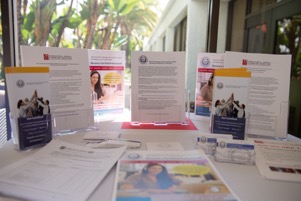 Promo Table (unstaffed) - 2027 CHIA Conference in Los Angeles, CA
$500.00
Promo Table (unstaffed) - 2027 CHIA Conference in Los Angeles, CA
$500.00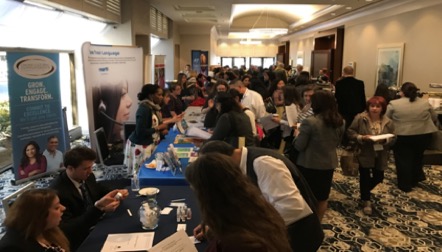 Exhibit Full - 2027 CHIA Conference in Los Angeles, CA
$1500.00
Exhibit Full - 2027 CHIA Conference in Los Angeles, CA
$1500.00.png) Amethyst Sponsor / Audio-Visual for One Breakout Room - 2027 CHIA Conference in Los Angeles, CA
$1000.00
Amethyst Sponsor / Audio-Visual for One Breakout Room - 2027 CHIA Conference in Los Angeles, CA
$1000.00 Amethyst Sponsor / Accessibility Accommodation - 2027 CHIA Conference in Los Angeles, CA
$1000.00
Amethyst Sponsor / Accessibility Accommodation - 2027 CHIA Conference in Los Angeles, CA
$1000.00.png) Bronze Sponsor / Branded Lanyards - 2027 CHIA Conference in Los Angeles, CA
$1500.00
Bronze Sponsor / Branded Lanyards - 2027 CHIA Conference in Los Angeles, CA
$1500.00.png) Silver Sponsor/ Conference Presence Plus - 2027 CHIA Conference in Los Angeles, CA
$3000.00
Silver Sponsor/ Conference Presence Plus - 2027 CHIA Conference in Los Angeles, CA
$3000.00.png) Gold Sponsor / Attendee Engagement - 2027 CHIA Conference in Los Angeles, CA
$5000.00
Gold Sponsor / Attendee Engagement - 2027 CHIA Conference in Los Angeles, CA
$5000.00.png) Platinum Sponsor / Conference Partnership - 2027 CHIA Conference in Los Angeles, CA
$9000.00
Platinum Sponsor / Conference Partnership - 2027 CHIA Conference in Los Angeles, CA
$9000.00